Over the past decade working with security leaders and SOC teams across industries, I’ve seen the same pattern repeat itself across organizations of every size: security teams may have more visibility than ever before, yet analysts are still overwhelmed trying to determine which alerts actually matter.
Modern IT environments generate enormous volumes of telemetry across cloud platforms, SaaS applications, endpoints, networks, and identity systems. Each platform produces valuable signals, but the combined volume can overwhelm L1 SOC analysts who must decide which alerts require investigation.
This challenge is something we recently discussed with Blaine Brennecke, Director of Security Operations at Bottomline, during a customer conversation about SOC modernization.
“Security teams today are flooded with alerts,” Brennecke explained. “The challenge isn’t collecting more security data. It’s being able to analyze that data quickly enough to identify what actually matters.”
Bottomline’s experience reflects a broader shift happening across the industry. As their security team modernized its SOC environment, they partnered with WEI and AI-driven security automation provider Simbian to rethink how alerts are investigated, triaged, and prioritized.
Their journey highlights a reality many security leaders are now confronting: modernizing the SOC requires more than deploying new tools.
How the SOC Became a “Rube Goldberg Machine”
When I first began working closely with SOC teams and CISOs, most SecOps environments were relatively simple. Teams monitored a handful of core systems using a SIEM, endpoint protection tools, and basic network monitoring. But as today’s CISO’s know, average enterprise environments are much more intricate.
Organizations now operate across hybrid infrastructures that include public cloud platforms, remote endpoints, SaaS applications, distributed workloads, and identity-driven access systems. Each environment generates its own telemetry, and analysts must correlate signals across all of them during an investigation.
Over time, the way many SOCs have evolved reminds me of a Rube Goldberg Machine, pictured below. New tools are deployed to solve legitimate visibility gaps, but each platform introduces its own alerts, dashboards, and investigation workflows. The system is an overly complex solution to a relatively straightforward problem. It is over designed and difficult to maintain…fascinating to observe but make it less effective.
Some tools integrate with each other. Some share data with the SIEM. But more often than not, the real integration layer ends up being the SOC analyst sitting in front of the screen.
SOC analysts frequently move between multiple systems just to gather enough context to determine whether activity represents a real threat. Investigations that should take minutes can take far longer when signals must be correlated manually across platforms.

The Operational Reality Inside Today’s SOC
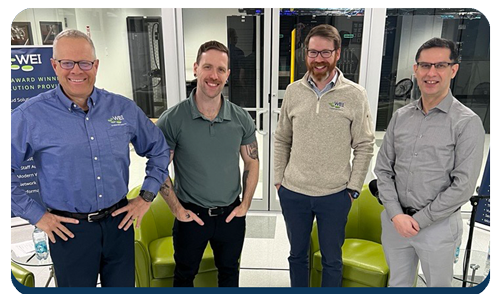
During a recent customer testimonial with Blaine Brennecke, Senior Director of Security Operations at Bottomline, we discussed challenges that nearly every SOC leader we work with across the market recognizes.
Brennecke’s experience reflects a broader reality across the industry. SOC teams now have unprecedented visibility into their environments. But visibility alone doesn’t solve the operational challenge of detecting and responding to threats quickly enough.
Security analysts must still investigate alerts, correlate signals across tools, and determine whether suspicious activity represents a real attack.
At the same time, security leaders are being asked to improve detection and response capabilities while managing constrained budgets and limited staffing. As Brennecke put it, “A lot of organizations are in the same bucket today. Do more, do it faster, and do it with less.”
To address these challenges, Bottomline began evaluating ways to modernize its investigation workflows. That included exploring new approaches to automation and AI-driven alert analysis.
Working with WEI and Simbian, Bottomline introduced new investigation workflows that help analysts start their work with significantly more context around each alert.
Instead of manually stitching together data from multiple systems, analysts can begin investigations with a clearer picture of what’s happening across the environment.
The Challenges Driving SOC Modernization
Organizations attempting to modernize their SOCs typically encounter several common challenges.
Alert Fatigue: Security analysts may receive thousands of alerts each day from multiple detection tools. Without effective prioritization, distinguishing meaningful threats from routine activity becomes extremely difficult.
Tool Fragmentation: Security technologies deployed across network, endpoint, cloud, and identity environments often operate independently. Each platform produces its own alerts and dashboards, forcing analysts to gather context from multiple sources during an investigation.
Security Data Volume: This is growing as organizations expand their digital infrastructure. Traditional SIEM architectures can struggle to scale efficiently as log volumes increase.
Staffing Constraints: Experienced SOC analysts remain in high demand, and many organizations struggle to recruit and retain the talent needed to manage increasingly complex environments.
These operational pressures are forcing security leaders to rethink how their SOCs are designed and operated.
Why Technology Alone Doesn’t Solve the Problem
SIEM platforms, extended detection and response technologies, and emerging AI-driven investigation tools are helping SOC teams analyze large volumes of telemetry more efficiently. Technologies like Simbian’s AI-driven SOC automation platform can ingest alerts from existing security tools and perform automated investigation and triage steps that traditionally required significant analyst time.
When deployed effectively, these platforms reduce the number of alerts that require manual analysis while helping analysts focus on higher-priority threats.
But deploying new technology without rethinking workflows rarely delivers the results organizations expect.
Analysts still spend significant time investigating alerts manually because the surrounding processes and architecture haven’t evolved alongside the tools. That’s why successful SOC modernization efforts focus not just on technology, but also on architecture, operations, and engineering discipline.
Moving Security “Left of Bang”
WEI’s approach to SOC modernization focuses on helping organizations move their security posture Left of Bang. The concept refers to identifying and disrupting threats earlier in the attack lifecycle so security teams can prevent incidents before they cause operational damage.
Achieving this shift requires a combination of architecture design, technology integration, and operational optimization.
Our cybersecurity experts work closely with organizations to design architectures that unify telemetry across network, endpoint, identity, and cloud environments. This allows SOC teams to investigate threats with greater context and reduces unnecessary signals across multiple platforms.
We also focus heavily on how technologies integrate with one another. Security tools deliver the most value when analysts can move seamlessly between systems during investigations rather than manually stitching together context.
Operational workflows are another critical component. Automation and AI can dramatically reduce repetitive investigation tasks, allowing analysts to focus on deeper threat analysis rather than spending hours triaging alerts.
Through WEI’s demo and integration labs, organizations can also test new security architectures before deployment. This validation process helps reduce implementation risk and ensures that new technologies deliver measurable improvements to SOC operations.
Building the Modern SOC
As organizations like Bottomline Technologies have discovered, SOC modernization is no longer optional. Attack surfaces continue to expand, and the amount of security data generated by modern infrastructure continues to grow. Security teams must adopt new approaches to detection and response if they want to keep pace with evolving threats.
The modern SOC must process large volumes of security data, prioritize high-risk threats, automate investigation workflows, and detect suspicious activity earlier in the attack lifecycle.
For many organizations, this shift is already underway.
“You’re no longer starting from square one,” Brennecke explained. “You’re starting 80 percent of the way down the triage pipeline.”
That change fundamentally alters how SOC analysts spend their time. Instead of sorting through large volumes of alerts, analysts can focus on deeper investigation and response activities.
Achieving this kind of transformation requires integrated architecture, operational alignment, and experienced engineering guidance. Organizations that take this approach are finding they can improve threat detection while reducing the operational burden placed on their SOC teams.
See How Bottomline Technologies Modernized Its SOC
Organizations evaluating SOC modernization initiatives often benefit from seeing how other security teams have approached similar challenges.
In our recent discussion with Bottomline Technologies, we explored how their security team partnered with WEI and Simbian to improve SOC visibility, reduce alert fatigue, and accelerate threat investigations across their environment.
Watch the full conversation to learn how Bottomline redesigned its SOC workflows and how new investigation models are helping analysts begin investigations nearly 80 percent of the way through the triage process.
Next Steps: Led by WEI’s cybersecurity experts and partnering with industry leaders, our cybersecurity assessments provide the insights needed to strengthen your defenses and ensure compliance. Whether you need to identify vulnerabilities, test your incident response capabilities, or develop a long-term security strategy, our team is here to help.
Contact WEI’s cybersecurity experts today to learn more about our assessments and discover how we can support your security goals. In the meantime, download our solution brief featuring WEI cybersecurity assessments.